What a Cayucos rental actually earns.
An honest look at short-term-rental economics on the Central Coast — demand, the county rules, the operating math, and where a Cayucos property pencils as an investment versus where it doesn't.

Great offset. Rarely pure cash flow.
Here's the straight read most buyers come for: a well-located, well-managed Cayucos short-term rental typically offsets a meaningful portion of carrying cost — and, on a good year, more — but it rarely turns into a pure cash-flow investment the way inland California can. Cap rates on stabilized Cayucos STRs generally run in the 3–5% range depending on the year; long-term-rental yields run lower. Where Cayucos wins is the moat: regulated, permit-limited supply, a tight coastal sales market, and tourist demand that doesn't depend on any single industry. If you want appreciation plus partial income plus personal use, the math is durable. If you want pure rent-roll yield, we'll tell you honestly when a deal pencils that way and when it doesn't.

Year-round, not just summer.
The Central Coast draws steady tourist traffic across the calendar, not just in July. Hearst Castle, Big Sur, Paso Robles wine country, and Morro Bay all pull year-round visitors, and the region's mild climate means a February weekend on the coast is a real trip, not a gamble. That spreads demand more evenly than a pure summer-beach market, which is what lets a part-time rental run beyond the peak weeks.
Cayucos specifically benefits from being small. There's limited new construction in coastal SLO County and the town stays low-density, so rental supply doesn't balloon the way it can in larger resort towns. Disciplined supply plus durable demand is the foundation the rest of the math sits on.
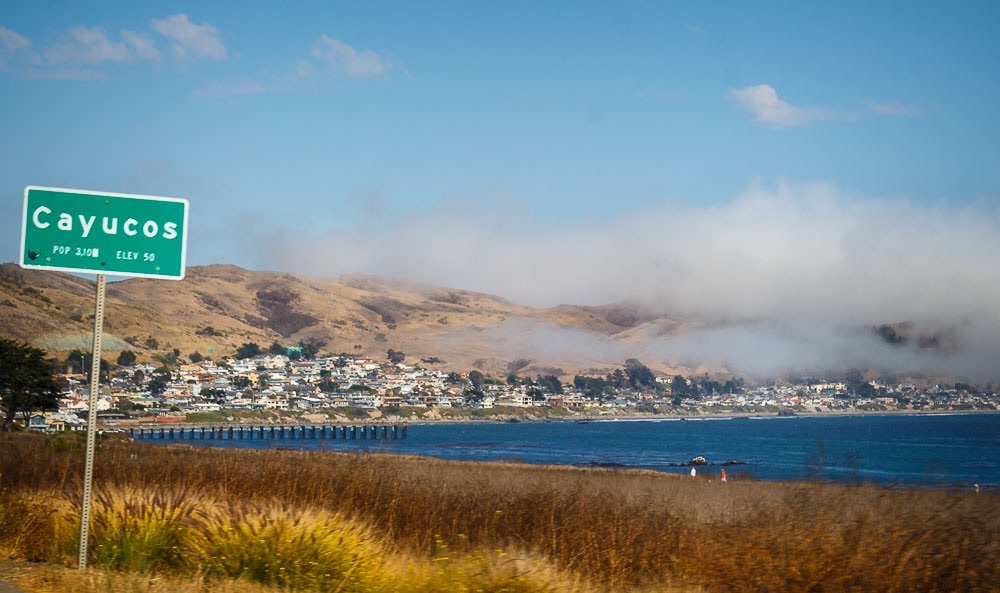
The county permits STRs — with rules.
Cayucos sits in unincorporated San Luis Obispo County, and the county's ordinance does permit short-term rentals — under specific permit requirements, density caps in certain neighborhoods, application timing, and occupancy and parking rules. It is a regulated market, not an open or a banned one, and the rules change periodically.
That regulatory friction is a double-edged sword, and it's worth understanding as a feature: it limits how much STR supply can come online, which protects the owners already operating. The practical takeaway is the same one we give every investor buyer — confirm a specific property's current STR feasibility (permit eligibility, density status, any neighborhood caps) before you write, rather than relying on an older report or a general assumption.
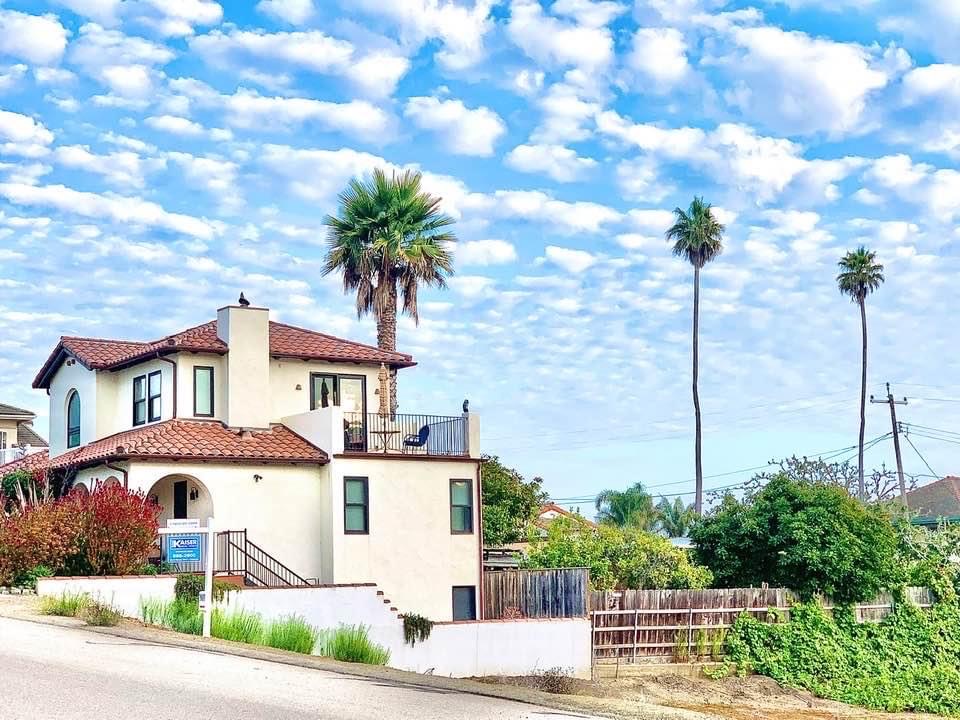
The lines that actually move the return.
We avoid publishing specific occupancy and nightly-rate figures, because they swing with the season, the property, and how actively it's marketed — quoting a single number would be misleading. What we can give you is the shape: most well-located, well-managed Cayucos STRs run on the order of 15–25 occupied weeks a year as part-time rentals (the owner uses the rest). The homes that do best are walkable to downtown or the pier.
On the cost side, turn-key property management runs roughly 25–35% of gross rental income locally; cleaning runs about $150–250 per turnover; and you carry the usual taxes, insurance (with an STR endorsement), and maintenance. Stack those against gross income and you land in that 3–5% stabilized cap-rate range on a good property. For hard numbers on a specific listing before you write, we work with a couple of local STR-feasibility shops that model it parcel by parcel — we'll introduce you.
Hands-off, or hands-on.
Turn-key management
A management company handles bookings, guest communication, cleaning, restocking, and maintenance — roughly 25–35% of gross rental income locally. It buys back your time and lets you be fully remote, but the margin compression is real and the choice of manager matters a lot. Some local operators are excellent; some less so.
Self-managed
You run the listing and guest communication yourself and coordinate cleaning and maintenance through local independents (cleaning $150–250 per turnover; handyman work hourly). It protects margin and most owners build a trusted short list over the first year — but it's real ongoing work, typically several hours a month.
The hybrid most owners land on
Many second-home owners self-handle the listing but contract out cleaning and maintenance to local sole-proprietors. It keeps more of the margin than full turn-key while staying manageable from out of the area. We can hand off introductions to managers, cleaners, handymen, and gardeners as part of your purchase.
Insurance posture
Standard homeowners coverage assumes personal use. Any short-term-rental activity usually requires a landlord or STR endorsement, sometimes a separate policy, priced on rental frequency and occupancy. Build this into the carry from day one — we can run a pre-offer insurance read that accounts for the rental posture you're planning.

When a Cayucos property pencils.
It pencils best for the buyer who wants three things at once: a property that holds its value on a coast that isn't making more land, partial income that offsets the carry, and personal use of a place they actually love. For that buyer, the durability of the asset and the regulated-supply moat make the math hold up over a long hold.
It pencils worst for the buyer chasing pure rent-roll yield. If cash flow is the only goal, inland California — Paso Robles, Fresno, Bakersfield — offers friendlier price-to-rent ratios, and we'll say so rather than talk you into a coastal cap rate that doesn't work. The honest version is the whole value of working with a local broker on this: we'll tell you when a specific Cayucos deal pencils as an investment and when it doesn't.
Rental-economics questions.
The questions investor and second-home buyers ask most about renting a Cayucos property.
-
Are short-term rentals allowed in Cayucos?
Yes, with permits. Cayucos is in unincorporated San Luis Obispo County, whose ordinance permits short-term rentals under specific permit, density, occupancy, and parking rules. There are density caps in certain neighborhoods and the rules change periodically, so any specific property's STR feasibility should be confirmed before you write rather than assumed.
-
What kind of occupancy and income can I expect?
Numbers vary a lot by location, layout, and how actively the home is marketed, so we don't publish a single figure — it would be misleading. The shape: most well-located, well-managed Cayucos STRs run roughly 15–25 occupied weeks a year as part-time rentals, with the owner using the rest. For a realistic projection on a specific property, we can connect you with local STR-feasibility shops that model it parcel by parcel.
-
What cap rate does a Cayucos STR typically run?
Stabilized cap rates on well-located, well-managed Cayucos STRs generally run in the 3–5% range depending on the year, net of management, maintenance, insurance, and STR taxes. Long-term-rental yields run lower (roughly 1–3%). Appreciation has historically been strong over 5–10 year holds, but we don't project it forward. For pure cash-flow yield, inland California pencils better.
-
What does property management cost?
Turn-key management (bookings, guest communication, cleaning, restocking, maintenance) runs about 25–35% of gross rental income locally. Cleaning alone is roughly $150–250 per turnover with several independent local cleaners. Self-managed owners typically spend several hours a month on listing and coordination. The right choice depends on how hands-on you want to be and how often you'll use the home yourself.
-
Does a Cayucos property work as a pure investment?
Honestly, as a pure cash-flow play the coast is harder than inland California — cap rates here are modest and price-to-rent ratios are friendlier in places like Paso Robles, Fresno, or Bakersfield. Where Cayucos wins is the moat: regulated, permit-limited supply, a tight coastal sales market, and demand that isn't tied to one industry. For appreciation plus partial income plus personal use, the math is durable. For pure yield, we'll tell you straight if a specific deal pencils.
-
How does insurance change if I rent the home?
Standard homeowners insurance covers personal use. Any short-term-rental activity usually requires a landlord or short-term-rental endorsement, and sometimes a separate policy — priced on rental frequency and occupancy patterns. We can run a pre-offer insurance read that accounts for the rental posture you're planning so it's built into the carry from the start.
-
Can you help me evaluate a specific property's numbers?
Yes — that's the most useful version of this conversation. Bring us a property (or let us shortlist some) and we'll talk through permit posture, realistic occupancy, management options, and the carry, and connect you with a local feasibility shop for parcel-level modeling before you write. Start a conversation →